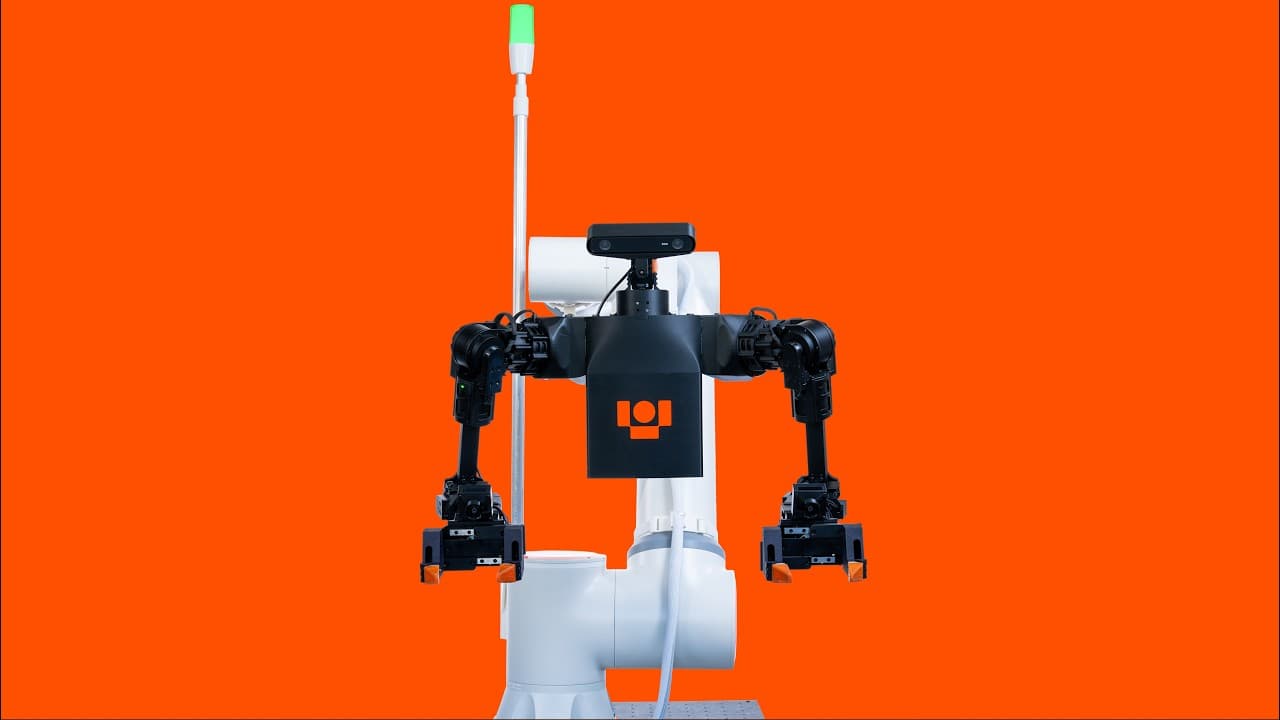
Ultra, a Brooklyn robotics company, just raised a $50 million Series A. Its robots pack real warehouse orders, and customers pay every month. Here is what a working robot business looks like, and what we take from it.
Most robot news is about robots that might do everything one day. This one is about a robot that does one thing today.
Video: Ultra
Ultra, a robotics company in Brooklyn, announced a $50 million Series A on October 9. Framework Ventures led it, and Y Combinator took part. Counting an earlier $12 million seed round, Ultra has raised $62 million.
One job, done well
Ultra did not try to build a robot that walks around and does any task. Its robot, called OP1, stays in one spot. It has two arms. It packs orders, and it can also sort items and put sets of items together.
Ultra says its robots have packed more than 500,000 orders for shipping. These are real orders for real customers, not a lab test.
Ultra's CEO and co-founder, Jon Miller Schwartz, told Fortune that humanoid robots get most of the attention, but other kinds of robots are doing most of the real work. Packing a box is not exciting. It is also a job that warehouses need done every day.
Customers pay every month
This is the part we find most interesting. Customers do not buy the robot outright. Per Fortune, they pay a fee to get it installed, then a monthly fee for hardware and software support. Schwartz says that demand has let Ultra raise its prices.
A monthly fee only works if the robot keeps working. If it stops, the customer stops paying. That is a much harder test than a good demo video.
A body and a brain from two companies
Ultra builds the robot, installs it, and runs it on site. The AI that controls it comes from another company, Physical Intelligence.
The two companies have shared how this works in practice. In one full shift, Ultra reported the robot ran on its own 96.4% of the time, using a Physical Intelligence model (watch the shift time-lapse (opens in a new tab)). That is one reported shift, not a promise for every robot every day. When the robot gets stuck, a person steps in. That fix keeps the order on track, and it also becomes data used to train the next version of the model.
So the hardware company gets a brain it did not have to build. The AI company gets real work to learn from. The line between "robot company" and "AI company" is getting harder to draw.
What we take from it
We are a much smaller team, but this is close to how we try to work.
Pick one process. Not "automate the business." One job, with a clear start and end.
Give it one owner. Someone who knows the work and decides what good looks like.
Let a person handle the hard cases. The system does the routine part. A person takes the odd ones.
Learn from those hard cases. Every time a person steps in, that is a lesson the system should not need twice.
We are also doing this with robots, in simulation for now. In our Retail Lab sim work, we trained a camera to spot products in a tote, then taught a simulated arm to pick them. It works 59% of the time in simulation. That is a long way from a robot packing real orders all shift. Ultra's numbers are a good reminder of what the real target looks like.
The real test
What we like about Ultra's story is that it is boring in the best way. One robot. One job. A customer who pays again next month.
If you have one process in your business that you would like to see done this way, with a person handling the hard parts, we are happy to talk it through.